
Uganda is often called the “Pearl of Africa,” not only for its breathtaking landscapes and wildlife but also for its incredibly rich and diverse culture. With over 50 ethnic groups and numerous languages, Uganda’s culture is a vibrant mix of traditions, customs, music, food, and social practices that have been preserved for generations. Whether you are a traveler, researcher, or cultural enthusiast, Uganda’s cultural heritage offers fascinating insights into African identity and community life.
A Nation of Many Tribes and Languages
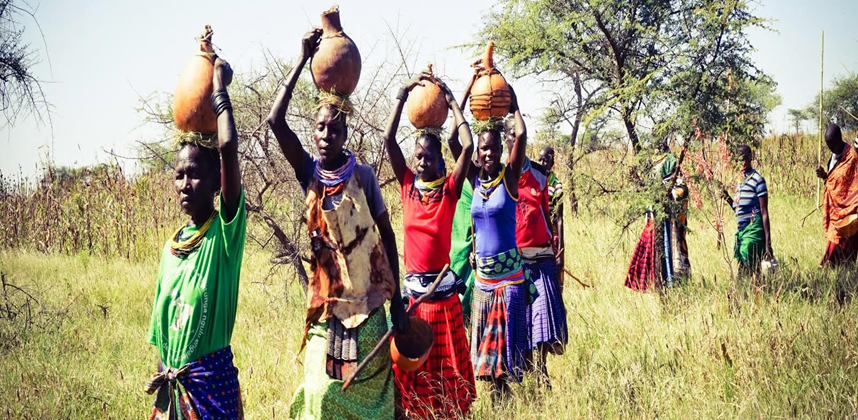
One of the many ethnic groups in Uganda. (Google photo)
One of the most interesting facts about Uganda’s culture is its ethnic and linguistic diversity. Uganda is home to major ethnic groups such as the Baganda, Banyankole, Basoga, Acholi, Langi, Iteso, Bakiga, and many others. Each group has its own language, customs, and traditional practices.
While English and Swahili are official languages, local languages are widely spoken and play a major role in daily communication, storytelling, and cultural ceremonies.
Traditional Kingdoms Still Exist
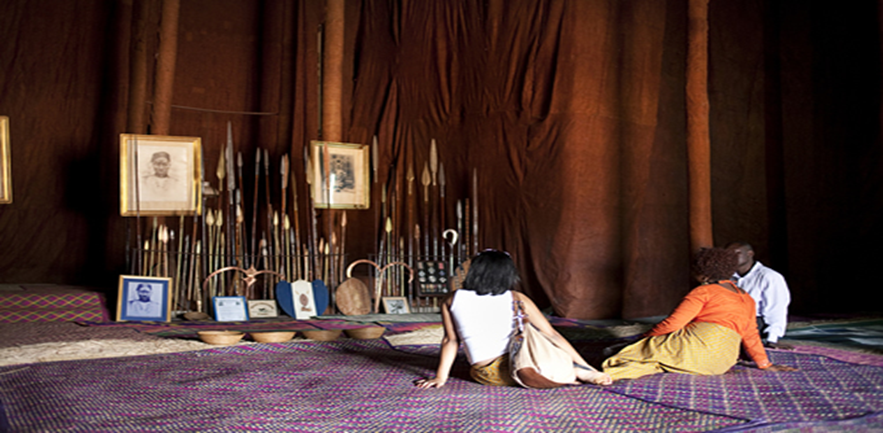
Tourists learning about the history of the Buganda Kingdom in Kasubi Tombs, a UNESCO World Heritage Site. (Photo Courtesy of Silverback Gorilla Tours)
Uganda is unique in that traditional kingdoms coexist with the modern state. The Buganda Kingdom, Bunyoro-Kitara, Tooro, Busoga, and others continue to maintain cultural leadership through kings (Kabaka, Omukama, Kyabazinga, etc.).
These kingdoms preserve cultural rituals, festivals, and heritage sites, such as the Kasubi Tombs, a UNESCO World Heritage Site. The presence of these kingdoms gives Uganda a strong link between past traditions and present governance.
Music and Dance Are at the Heart of Culture
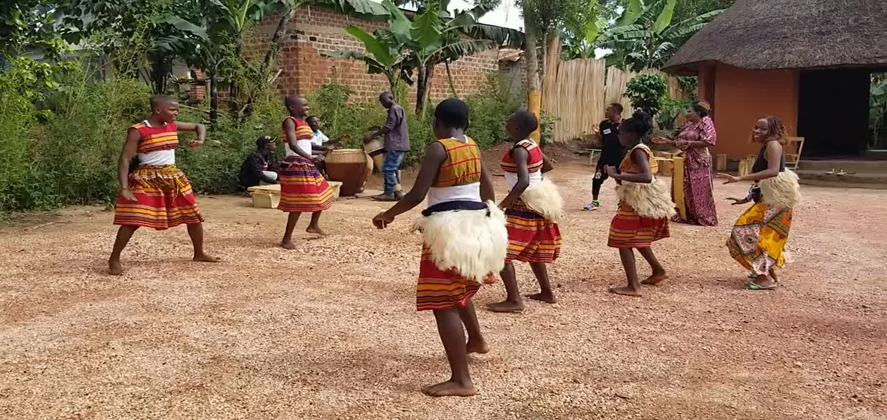
Cultural dancers performing the Bakisimba dance of the Baganda people. (Photo Courtesy of Wikimedia Commons)
Ugandans express culture through music and dance, which vary across regions. For example:
- The Bakisimba dance of Buganda is known for its energetic drumming and waist movements.
- The Adungu and Larakaraka dances are popular among the Acholi and Langi people.
- The Runyege and Bwola dances are associated with royal and community celebrations.
Drums play a central role in Ugandan culture, symbolizing communication, celebration, and spiritual connection. Music is not just entertainment, it is used in ceremonies, storytelling, and social gatherings.
Strong Emphasis on Community and Respect
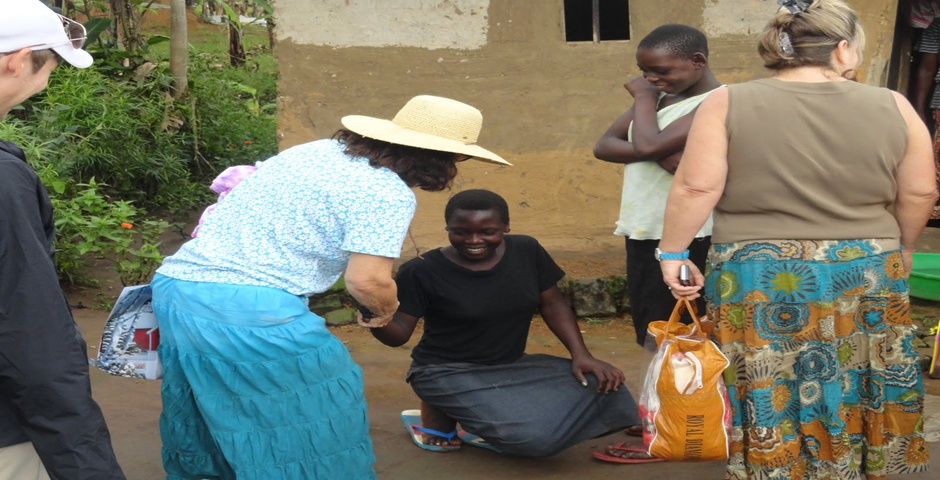
A young lady kneeling while greeting an elder as a sign of respect. (Google photo)
Ugandan culture strongly values community, respect, and family. Elders are highly respected and are seen as custodians of wisdom and tradition. Greetings are important, and showing politeness, humility, and hospitality is deeply ingrained in social life.
In many communities, extended families and clans play a big role in decision-making, marriage arrangements, and conflict resolution.
Unique Traditional Ceremonies and Rituals
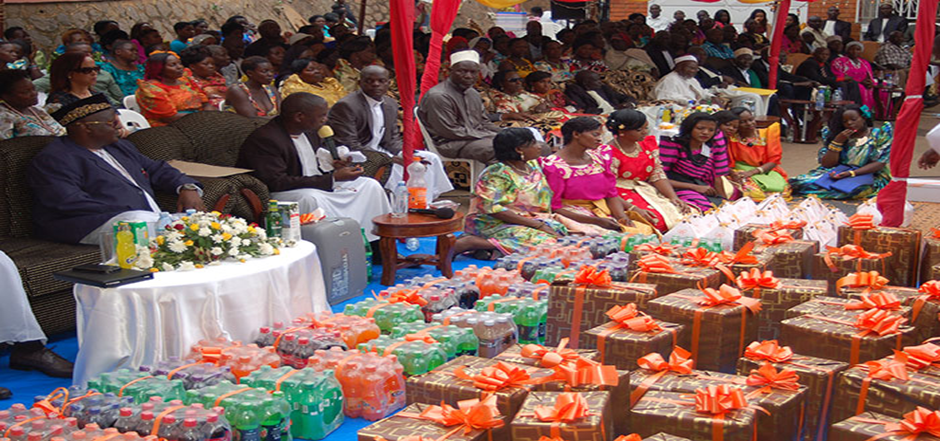
A traditional pre-wedding ceremony (Kwanjula) in Buganda. (Google photo)
Uganda has many fascinating cultural ceremonies. For instance:
- Introduction ceremonies (Kwanjula) among the Baganda are elaborate pre-wedding events where families formally meet and exchange gifts.
- Naming ceremonies are held to welcome newborns into the clan.
- Harvest festivals and initiation rites mark important life stages in different ethnic groups.
These ceremonies are rich in symbolism, attire, music, and traditional food.
Traditional Dressing Tells a Story
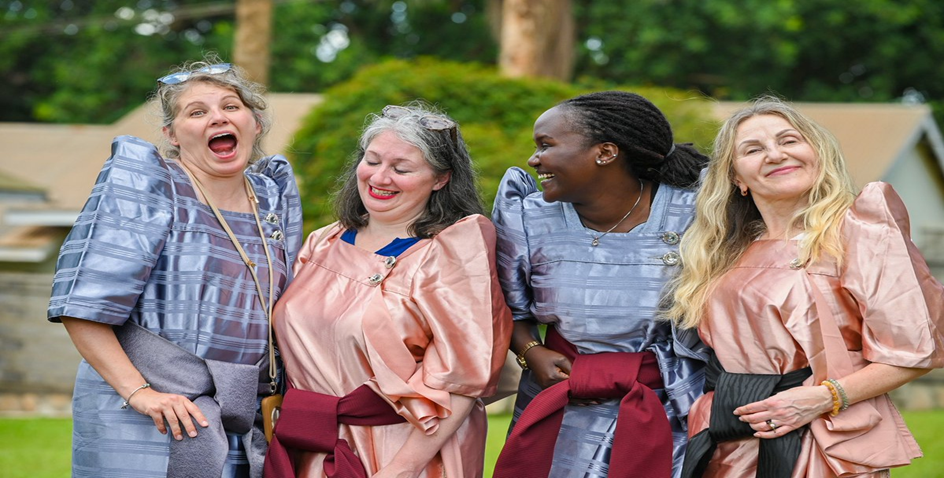
Guests at a traditional wedding ceremony dressed in the Gomesi, a popular traditional dress among Baganda women. (Google photo)
Ugandan traditional attire reflects identity and heritage. The Gomesi is a popular traditional dress among Baganda women, while men often wear the Kanzu. Other ethnic groups have unique clothing styles made from bark cloth, animal skins, or woven fabrics.
Bark cloth, made from the Mutuba tree, is one of Uganda’s oldest cultural fabrics and is still used in ceremonies and crafts today.
Food as a Cultural Identity
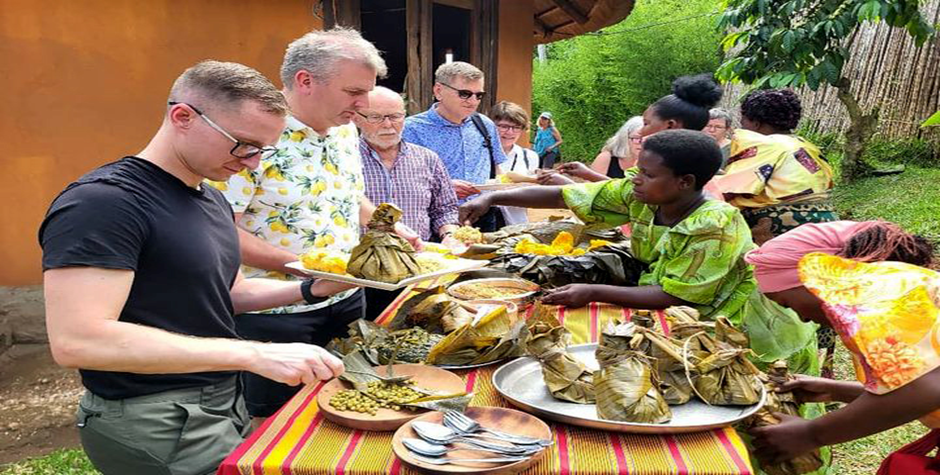
Tourists being served local traditional food and Luwombo sauce, a traditional Buganda dish steamed in banana leaves. (Google photo)
Ugandan cuisine is an important part of cultural expression. Staples include matooke (steamed green bananas), posho, millet, cassava, sweet potatoes, and rice. Groundnut sauce, beans, fish, and meat stews are common accompaniments.
Each region has its specialties for example, Luwombo, a traditional Buganda dish steamed in banana leaves, is often served during special occasions. Food is not just nourishment but a way of bonding and celebrating together.
Storytelling and Oral Traditions
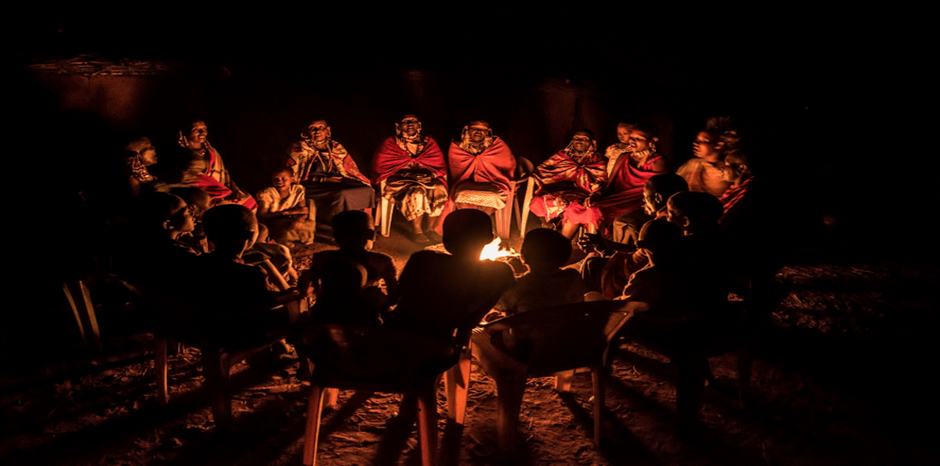
Folkore and Storytelling among one of the local communities in Uganda. (Dagiz Travel)
Before modern education systems, knowledge was passed down through oral storytelling, proverbs, and folklore. Elders would share stories about heroes, morals, and history around the fire.
These stories taught values such as bravery, honesty, respect, and unity, and many are still told today in schools, homes, and cultural festivals.
Cultural Festivals and Modern Celebrations
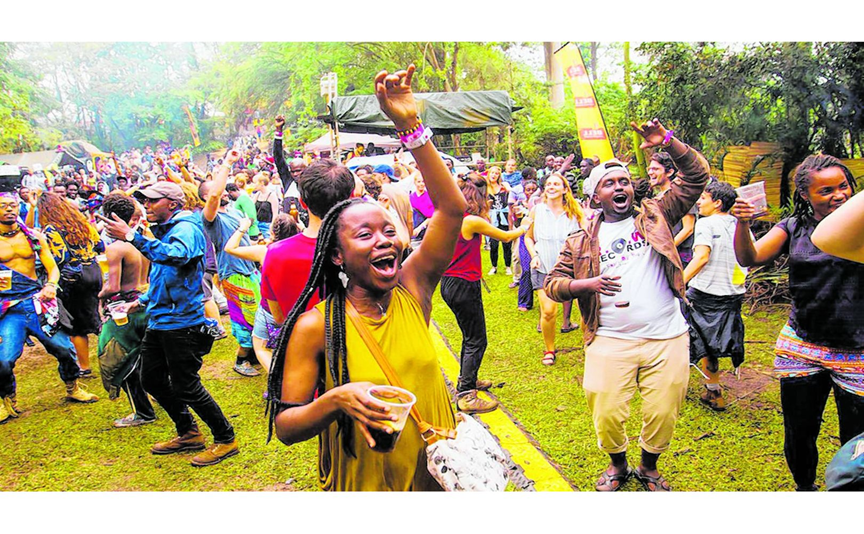
Revellers having a good time at the yearly Nyege Nyege Festival in Uganda. (Photo Courtesy of The Citizen Tanzania)
Uganda hosts many cultural festivals that showcase dance, music, fashion, and food. Events like Buganda’s Kabaka’s Birthday, Empango celebrations in Tooro, and the Nyege Nyege Festival attract both locals and international visitors.
These festivals highlight how Ugandan culture continues to evolve while preserving tradition.
Hospitality Is a National Trait
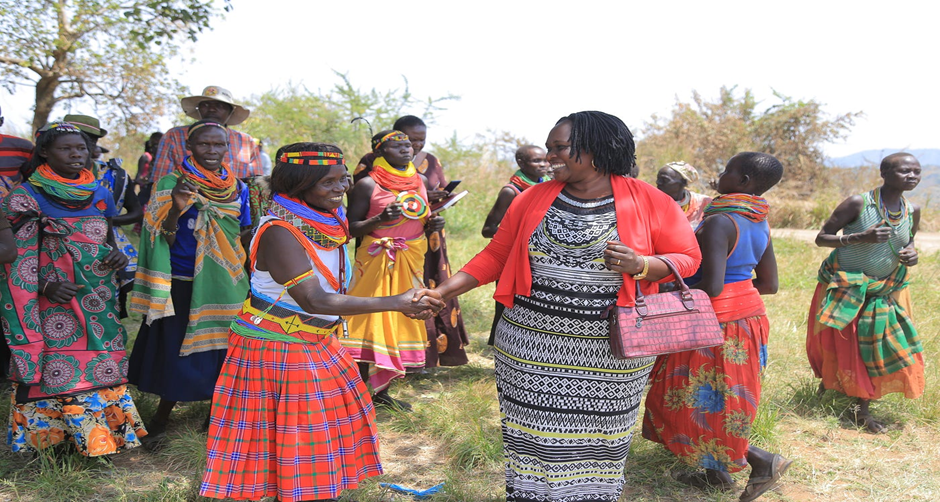
A tourist and a Karimojong lady share a light moment. (Google photo)
Ugandans are widely known for their warm hospitality and friendliness. Visitors are often welcomed with smiles, greetings, and offers of food or assistance. This hospitality is rooted in cultural values of generosity and community support.
Uganda’s culture is a rich blend of tradition, diversity, and modern influences. From traditional kingdoms and vibrant dances to unique foods and ceremonies, every aspect of Ugandan life reflects a deep connection to heritage and community. As Uganda continues to grow and modernize, its cultural identity remains a powerful symbol of pride, unity, and resilience. Exploring Uganda’s culture is not just about observing traditions, it is about experiencing the spirit and warmth of its people.